2025 in the Written Word
As best I can rank them, my favorite books I read in 2025
There’s no way to introduce a ‘best-of’ listicle in a non-hackneyed way, so I’ll keep this brief. 2025 was a maelstrom of challenge, suffering, growth, spirituality, romance, learning, difficulty, grace, and more. In lieu of baring my soul and sharing deeper personal reflections on the year, I present my reality mediated by my favorite books that I read this year.
Honorable Mentions
- Meet Me in the Bathroom by Lizzy Goodman: a superb chronicle of the indie rock scene in New York City in the 2000s. Reading this made me nostalgic for a cultural moment I never fully appreciated when it was in full swing, and it got me hooked on the Yeah Yeah Yeahs all over again.
- Mood Machine by Liz Pelly: Though I have many quibbles with her analysis and conclusions, Pelly’s takedown of Spotify is extremely well-researched and comprehensive. While her tone veers towards relentlessness, her defense of artistic integrity feels necessary in the face of the monolithic music streaming industry.
- Abundance by Ezra Klein and Derek Thompson: A fast read, but credit to Klein and Thompson for igniting a nationwide policy debate that has little to do with the Orange Man himself. I find the principle that we must forge a liberalism that builds very much worth getting excited about.
- Glass Century by Ross Barkan: Barkan is one of my favorite journalists today, and his third novel is a tale of New York City in the vein of Tom Wolfe. A page-turning epic that only flags near the end, I can’t wait for Barkan’s next work of fiction.
Top Ten Favorite Books of 2025
10. “The Three-Arched Bridge” by Ismail Kadare
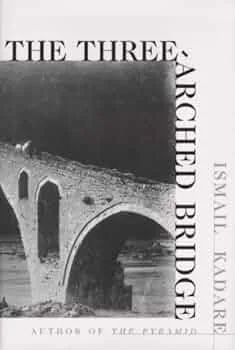
“The shadows of its minarets are slowly falling over us. This is an ominous peace, worse than any war.”
Hodgson’s translation from the Albanian renders Kadare’s deceptively simple retelling of an old Balkan myth in clear prose. What emerges is a masterclass in world-building: Kadare deftly evades contemporary censors by mapping his political reality under communist rule onto fourteenth-century Albania, poised on the precipice of Ottoman conquest. Kadare’s themes of common folk tossed about by sweeping historical change and the myths and political machinations they employ to make sense of them resonate in our era. The image of a doomed soul entombed within the titular bridge remains genuinely haunting.
9. “The House of Mirth” by Edith Wharton
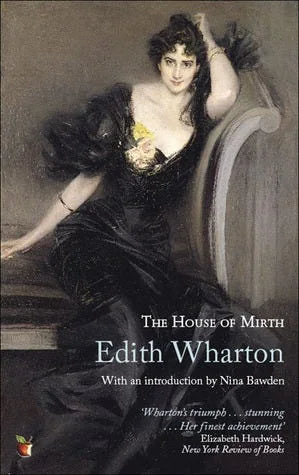
“The attitude revealed the long slope of her slender sides, which gave a kind of wild-wood grace to her outline — as though she were a captured dryad subdued to the conventions of the drawing-room; and Selden reflected that it was the same streak of sylvan freedom in her nature that lent such savior to her artificiality.”
Anyone who had the misfortune of being close to me while I trudged through The House of Mirth may be surprised to see it here. After reflection, this novel deserves its place. Wharton’s prose is masterful, and she constructs turn-of-the-century New York with a social critic’s acuity and her trademark genius for character. Through Lily Bart, Wharton dramatizes the tension between individual longing and the ceaseless pull of social expectation.
8. “Doctrine and Word” by Mark Ellingsen
“Therefore, to share all that Christ has means that we participate in the divine project of creating new good in our world.”
Ellingsen’s primer is designed as a practical guide for Christian ministers seeking to connect doctrine to everyday life. From my perspective as a layperson, Ellingsen successfully articulates how a Christian can understand and apply theology away from the pulpit. His ecumenical approach is largely fair-minded, though his Lutheran background shades his discussions of God, the Trinity, Sin, and atonement. As an introductory text, it answered long-held questions I had on Christianity while giving me a foundation for further study. Dr. Ellingsen, if you’re reading this, please respond to my email.
7. “Sanctuary” by William Faulkner
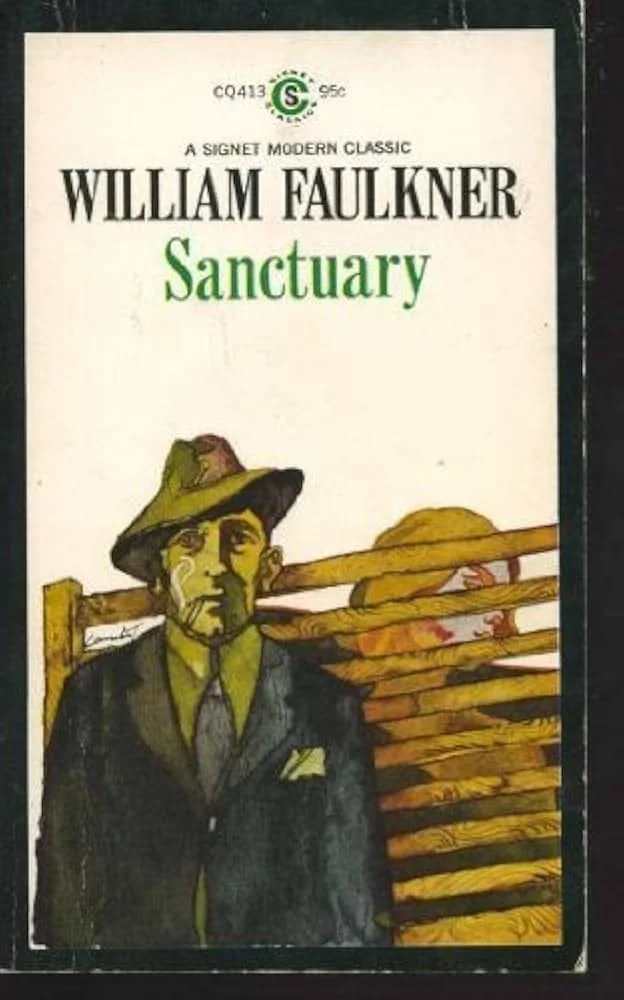
“She thought of them, woolly, shapeless; savage, petulant, spoiled, the flatulent monotony of their sheltered lives snatched up without warning by an incomprehensible moment of terror and fear of bodily annihilation at the very hands which symbolized by ordinary the licensed tranquility of their lives.”
As much of a Faulkner enjoyer as I am, his oeuvre is not without its clunkers, particularly when he ventures into genre fiction. A Fable overstretches Faulkner’s ambition, and Mosquitoes is drab and colorless. The horror novel Sanctuary, however, is Faulkner’s most successful flirtation with genre. Faulkner meditates on powerlessness in the face of evil, as would-be hero Horace Benbow is impotent against the malevolent Popeye. Sanctuary is not an easy read, but it offers a richly rewarding chilling look into man’s capacity for darkness.
6. “V.” by Thomas Pynchon
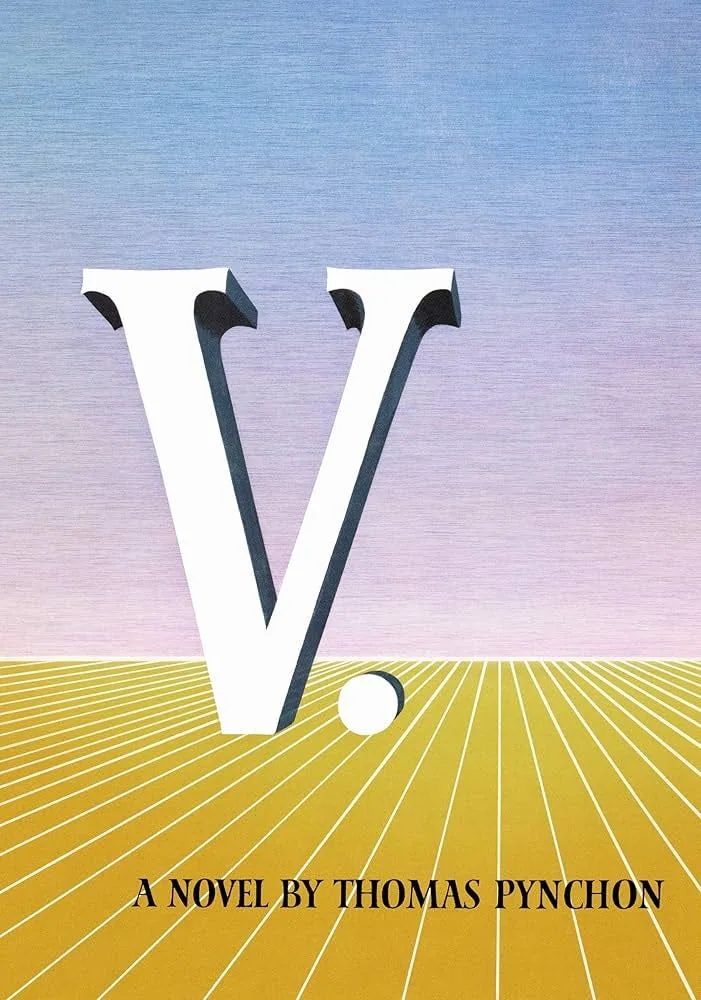
“Love with your mouth shut, help without breaking your ass or publicizing it: keep cool, but care.”
The last Pynchon I read, Vineland, left me dissatisfied with its breeziness and undercooked attempt at diagnosing a culture in the thrall of corporate media. V. was much more rewarding. It’s quite literally incredible that Pynchon’s first novel featured such a fully formed voice. Like its successor Gravity’s Rainbow, and like distant predecessors such as Finnegan’s Wake, I enjoyed this novel the most when I succumbed to it as a fever dream. From chapter to chapter Pynchon leads readers through a dizzying succession of scenes, forever staggering toward an elusive sugar bowl. As an aside, it was a pleasant surprise to discover the source of the name of Thrice’s best album.
5. “Germinal” by Emile Zola
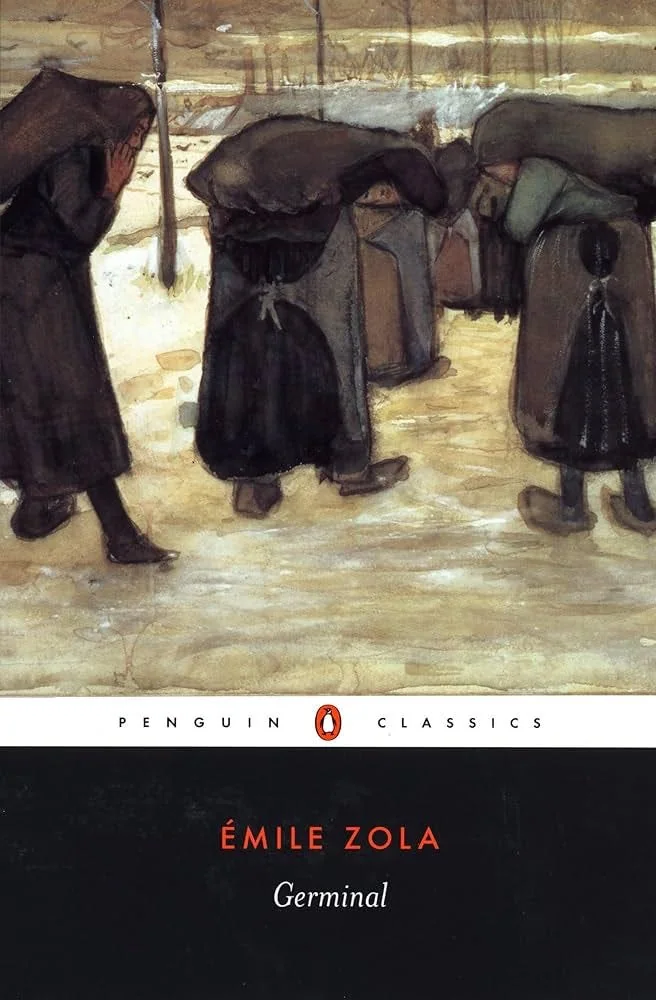
“Men were springing up, a black avenging host was slowly germinating in the furrows, thrusting upward for the harvests of future ages. And very soon their germination would crack the earth asunder.”
Many of my favorites this year are more concerned with social movements rather than individual psychology, and Germinal is a foundational example. Zola portrays mid-nineteenth century French coal miners and their capitalist overlords with unsparing realism. He refuses sentimental lionization of the working class, nor does he portray the coal mining bosses as cartoonish fat cats motivated solely by greed. The workers’ choice to strike is rendered noble and justified, even as their bosses are portrayed with human complexity. Étienne Lantier, autodidact, horny lout, and self-conscious poseur, exemplifies the deprived yet potent masses that fomented revolution.
4. “Price of the Ticket” by James Baldwin
“For, intellectual activity, according to me, is, and must be, disinterested—the truth is a two edged sword—and if one is not willing to be pierced by that sword, even to the extreme of dying on it, then all of one’s intellectual activity is a masturbatory delusion and a wicked and dangerous fraud.”
“The resolution of a story must occur in us, with what we make of the question with which the story leaves us. A plot, on the other hand, must come to a resolution, prove a point; a plot must answer all the questions which it pretends to pose.”
If I could steal the talents of any twentieth-century writer, it would be Baldwin. The Price of the Ticket collects his finest nonfiction, including essays on race, New York, exile, art, Europe, and America. Baldwin, a queer, often expatriate armchair social scientist in the thralls of perpetual heartbreak, is a singular voice. No one else captures the psychic reality of the mid-century West with greater precision or moral authority.
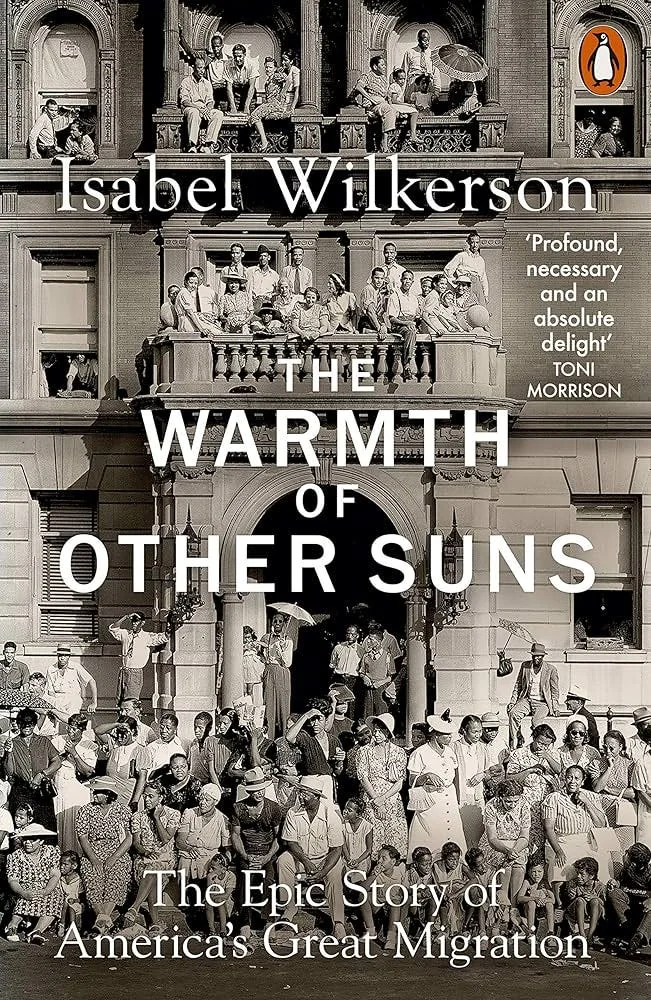
3. “The Warmth of Other Suns” by Isabel Wilkerson
“He had learned that fear when he was little and once passed the white people’s church. The kids came out of the church when they saw him. They threw rocks and bricks and called him the vilest names that could spring from a southern tongue. And he asked his grandparents, ‘What kind of god they got up inside that church?”
Wilkerson’s account of the Great Migration is exemplary popular history. By braiding three individual lives with broader historical context, she captures themes of displacement, aspiration, alienation, and hope. Each character in her triptych is compelling in their own way, but none lingers more vividly in my mind than Robert Foster, the egomaniacal and immensely successful personal doctor of Ray Charles who always dressed to the nines and threw banger parties in his new kingdom of Los Angeles.
2. “The Sirens of Titan” by Kurt Vonnegut
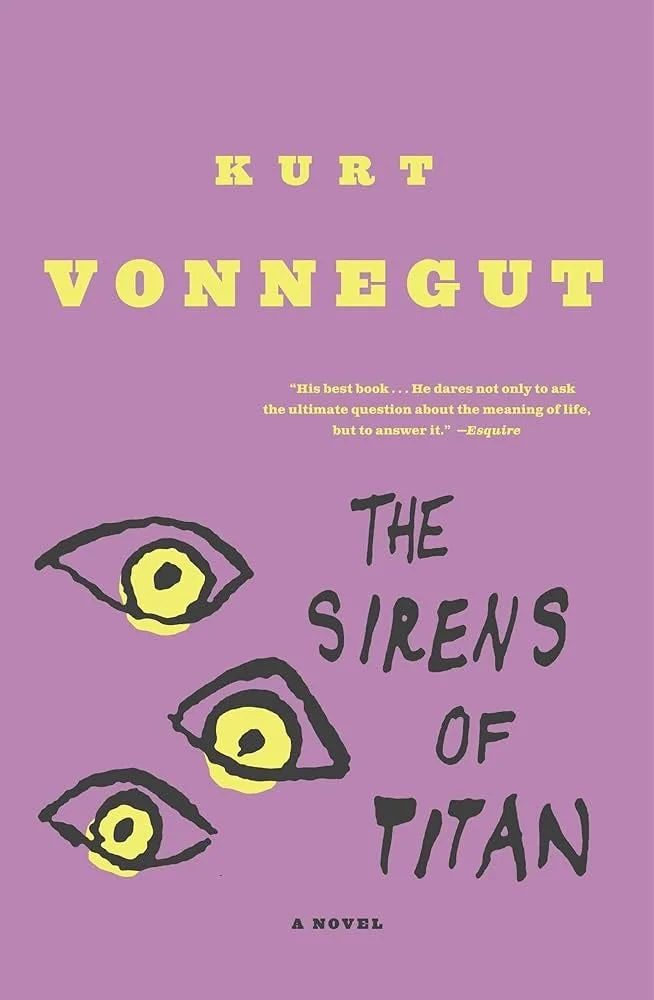
“The worst thing that could possibly happen to anybody would be to not be used for anything by anybody. Thank you for using me, even though I didn’t want to be used by anybody.”
Vonnegut’s second novel, the work of a master of style, left me wondering how I’d made it this far in life without it. Its discussion of free will is sharp, but the novel shines most for the pure joy of reading it: hilarious, fast-paced, and devastatingly simple without the mock-austerity of a Hemingway. I can’t go on for too long here. It’s just a damn good book that reminds me of why I read.
1. “Rejection” by Tony Tulathimutte
“And it’s almost endearing how people are so transparently their child selves online, how irrespective of content or sophistication the subtext is always look at me and how dare you and the sub-subtexts who am I and save me.”
My favorite book of the 2020s, full stop. Born in 1996, I came of age on Facebook, where social currency was counted as the number of likes on a status, my friends and I traded thousands of DMs, and we proclaimed our personalities by liking pages with titles such as “I will go out of my way to step on a crunchy-looking leaf.” Rejection is the work of art that best crystallizes the psychoses, yearnings, and incapacities that result from growing up online. It’s dark, but too hilarious to be purely cynical. If dementia ever wipes memories of my young adulthood clean, hand me this book, and I’ll remember who I am.